
Building a home is often the biggest investment you’ll ever make, and understanding the “bones” of your project is the best way to ensure that investment lasts for generations. Whether you’re a first-time homebuyer or a seasoned DIYer planning a custom build, knowing the essential components is your first step toward success.
Key Elements in Home Construction: The Quick Answer
The key elements in home construction consist of three primary pillars: structural integrity (foundation, framing, and roofing), functional systems (plumbing, electrical, and HVAC), and the building envelope (insulation, windows, and exterior finishes). Together, these elements ensure a home is safe, energy-efficient, and comfortable. Beyond the physical build, successful construction relies on rigorous pre-planning, including soil testing, architectural design, and securing local permits.
1. The Foundation: Starting on Solid Ground
Every great home starts from the bottom up. The foundation is the most critical element because it supports the entire weight of the house and protects it from soil movement and moisture.
-
Slab-on-Grade: A solid concrete slab poured directly onto the ground. It’s cost-effective and common in warmer climates.
-
Crawl Space: A raised foundation that creates a small gap between the ground and the house, making it easier to access plumbing and wiring.
-
Basement: A deep foundation that provides extra living or storage space, popular in colder regions where the foundation must sit below the frost line.
Expert Tip: Don’t skip the soil test. Before pouring a single drop of concrete, a geotechnical engineer should check if your ground can handle the load. This prevents expensive cracks and settling issues later.
2. Framing: The Skeleton of Your Home
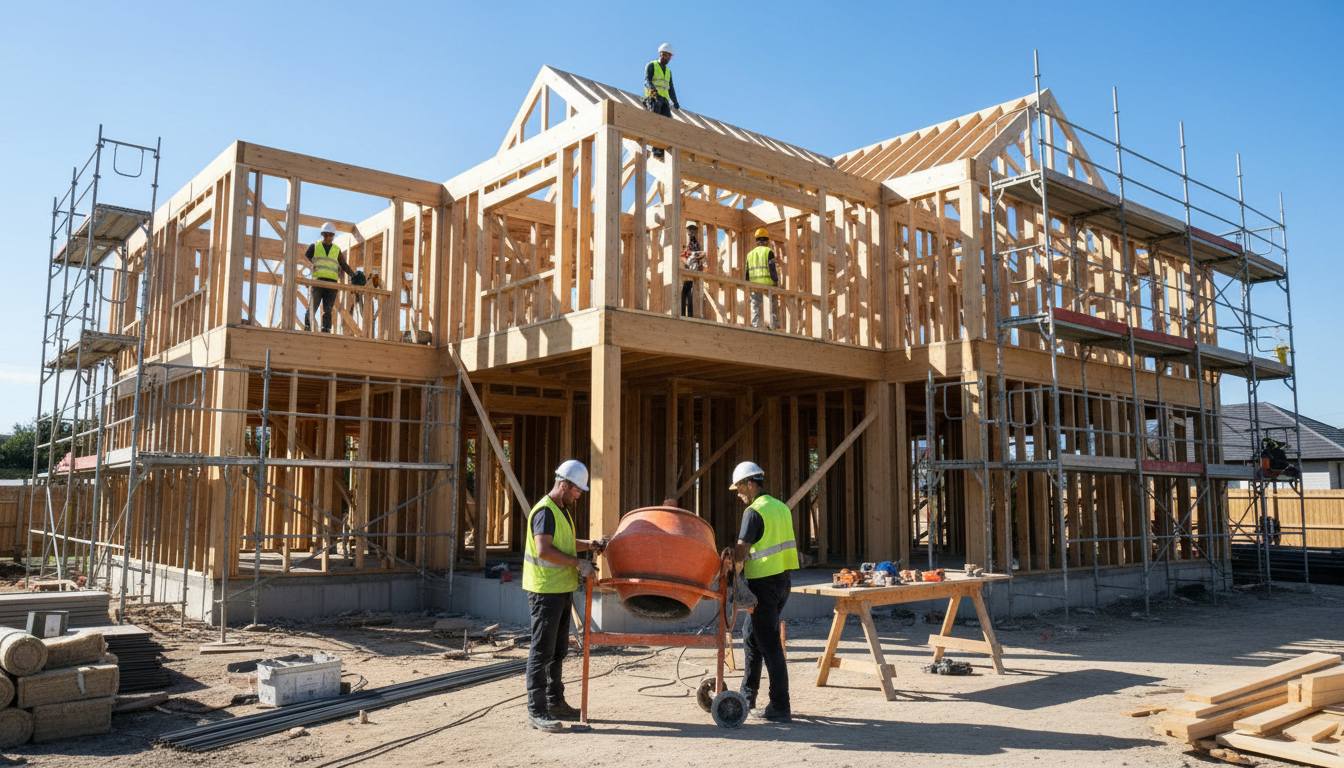
Once the foundation is set, the “skeleton” or framing begins. This stage defines the layout of your rooms and provides the structural support for the walls, floors, and roof.
Why Framing Quality Matters
If the framing is off by even an inch, it can cause a “domino effect” of problems. Your doors might not close right, your floors might squeak, and your drywall might crack. Most homes use timber framing, but steel framing is becoming more popular for its fire resistance and durability.
3. The Building Envelope: Your Home’s “Skin”
The building envelope includes everything that separates the inside of your home from the outside world. This is where your home gets its “curb appeal,” but its real job is protection.
-
Roofing: Whether it’s asphalt shingles, metal, or tile, the roof is your first line of defense against rain and snow.
-
Windows & Doors: These are vital for natural light and ventilation. High-efficiency, double-pane windows are the standard today to keep energy bills low.
-
Siding: From classic brick to modern fiber cement, siding protects the frame from moisture and pests.
4. Mechanical Systems: The “Organs” of the House
Just like a human body, a house needs systems to keep things moving. These are often installed during the “rough-in” phase, before the walls are closed up with drywall.
| System | Key Component | Purpose |
| Plumbing | Pipes & Drains | Moves fresh water in and waste out. |
| Electrical | Wiring & Panels | Powers your lights, appliances, and devices. |
| HVAC | Furnace & Ducts | Regulates temperature and maintains air quality. |
5. Insulation and Drywall: Efficiency and Privacy
Once the systems are in, it’s time to seal the house. Insulation is the unsung hero of home construction; it keeps you warm in the winter and cool in the summer.
After insulation, drywall is hung to create the actual surfaces of your rooms. This is the stage where your house finally starts looking like a home rather than a construction site.
6. Interior Finishes: The Personal Touch
This is the part most homeowners look forward to. It includes:
-
Flooring: Hardwood, tile, laminate, or carpet.
-
Cabinetry: Essential for kitchens and bathrooms.
-
Trim and Molding: The “jewelry” of the house that hides gaps between walls and floors.
-
Paint: The easiest way to infuse your personality into the space.
7. Compliance and Safety: The “Must-Haves”
You can’t talk about construction without talking about the law. Every key element must meet Local Building Codes.
-
Permits: You need these before you start.
-
Inspections: Professional inspectors will visit at various stages (foundation, framing, and final) to ensure everything is up to safety standards.
-
E-E-A-T Principle: When hiring a team, look for experience and authority. A builder who has been in the business for 20 years and has a portfolio of satisfied clients is your best bet for a trustworthy build.
Final Thoughts
Building a home is a marathon, not a sprint. By focusing on these key elements—foundation, framing, systems, and finishes—you ensure that your dream home isn’t just beautiful, but safe and sustainable for years to come.